The periodic table of elements is a tabular display that organizes all known chemical elements based on their atomic number, electronic configuration, and recurring chemical properties. This fundamental tool in chemistry and physics provides a systematic way to understand and predict the behavior of elements and their interactions. Whether you are a student or an educator, mastering the periodic table is an essential first step in exploring science.
Why Choose the Periodic Table of Elements for Learning Chemistry?
Studying the structure of matter can sometimes feel complicated without the right visual guide. Therefore, students and teachers frequently rely on the periodic table of elements because it presents complex data in a neatly structured format. Additionally, this informative chart helps identify groups, periods, and atomic mass instantly.
Benefits of Interactive Chemical Element Charts
Using clear visual references provides unmatched flexibility for understanding basic chemical patterns. Furthermore, readers can instantly recognize the differences between metals, non-metals, and noble gases at a single glance. Understanding the intricate arrangement of elements allows scientists and students alike to deduce chemical trends such as electronegativity, atomic radius, and ionization energy with remarkable precision.
Main Features and Types of Elements in the Periodic Table
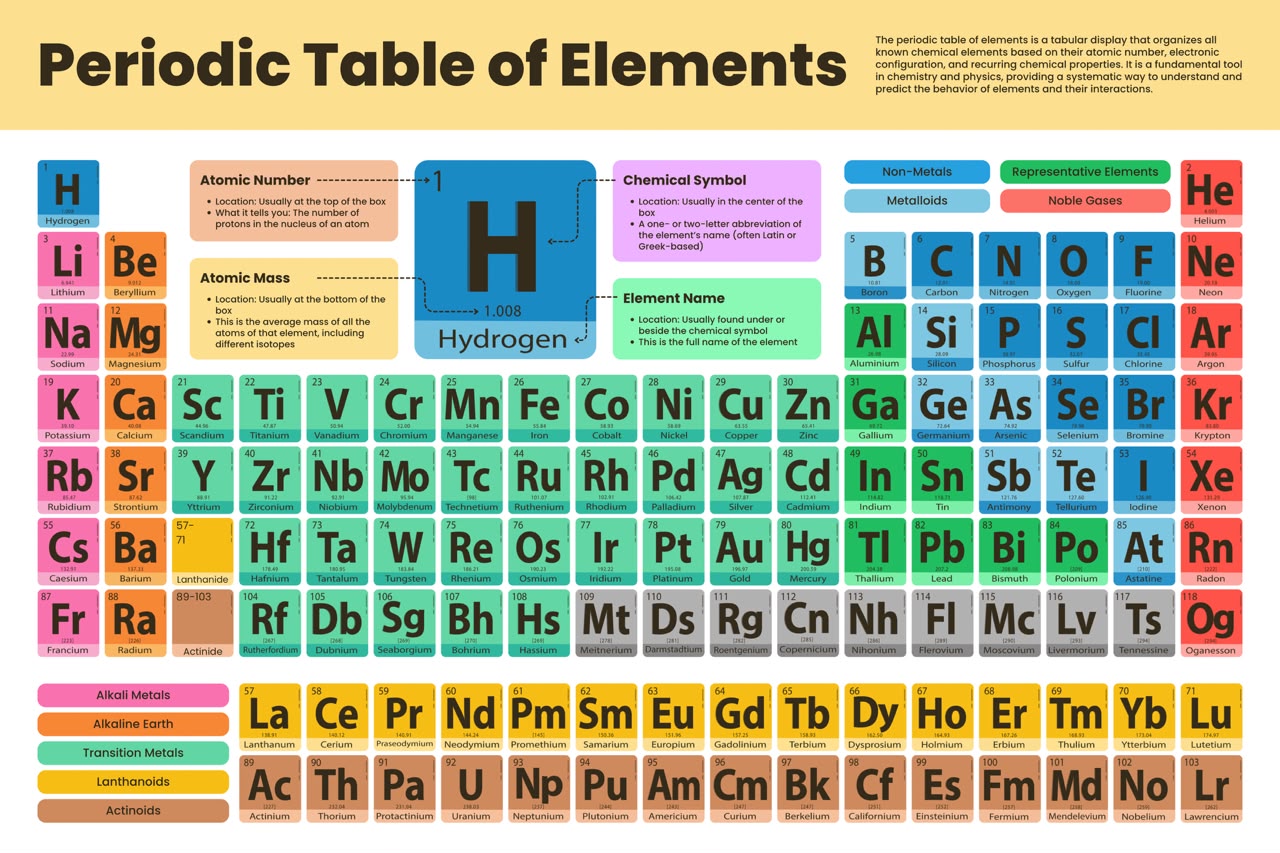
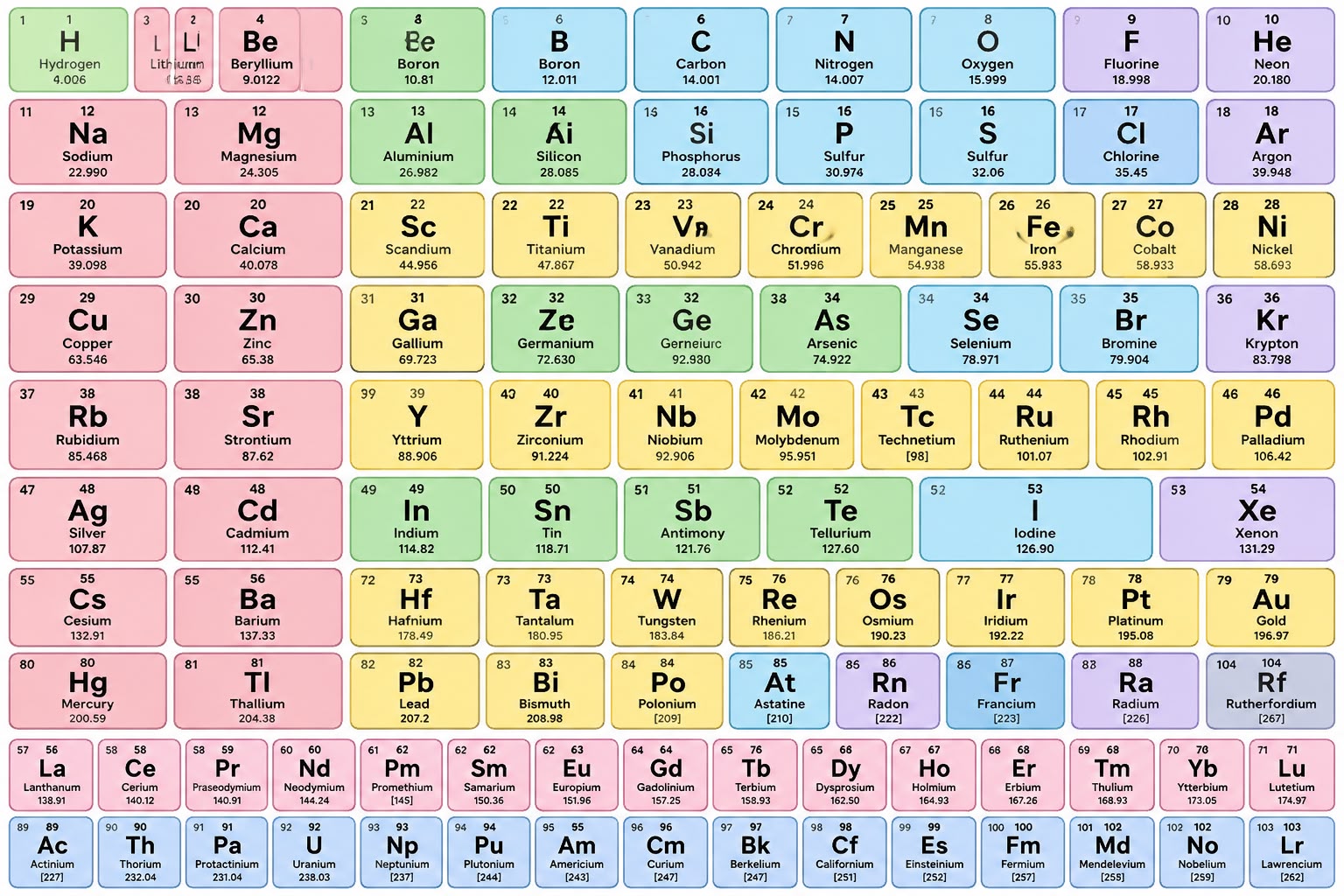
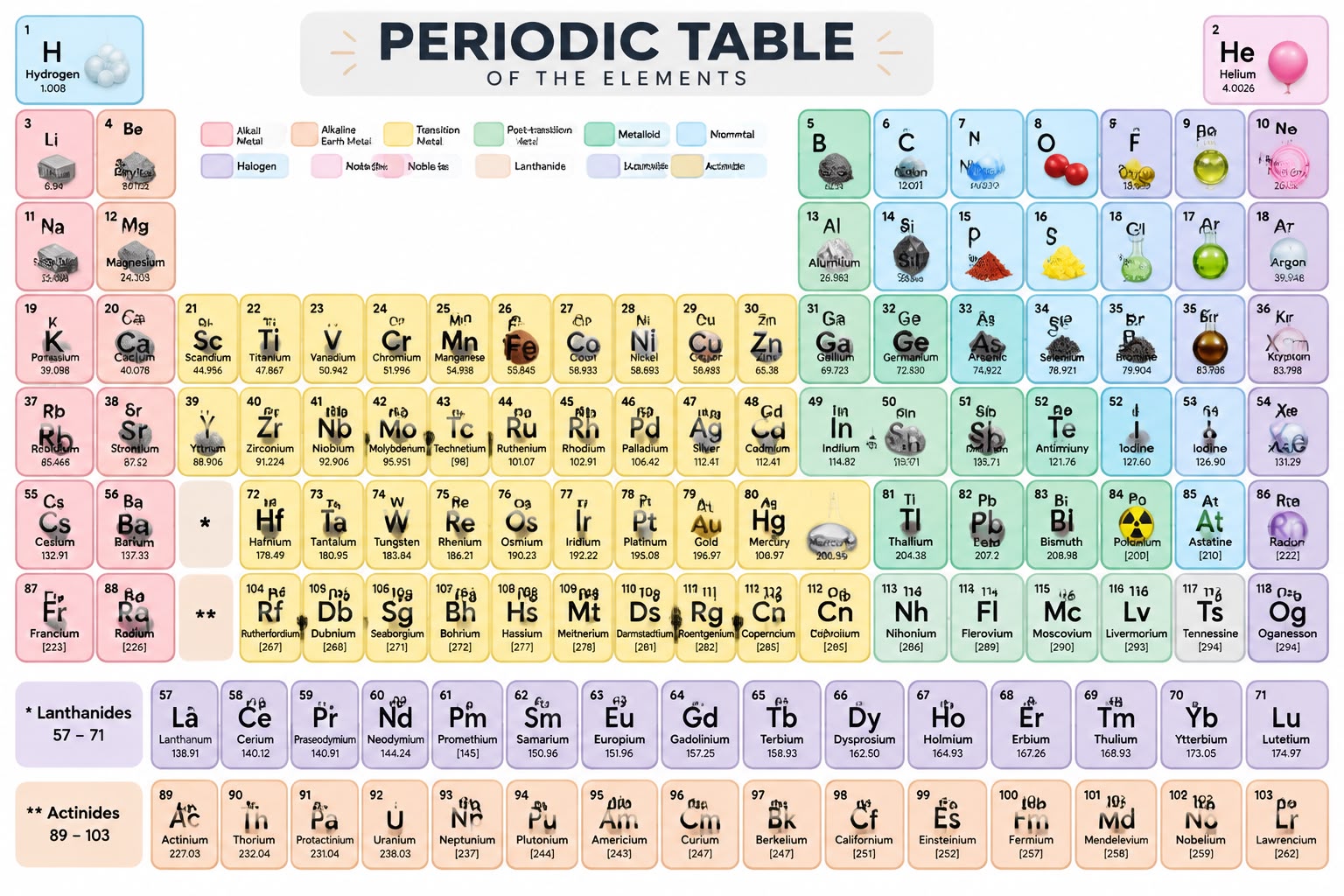
Every section on the periodic table is carefully categorized into specific groups to maintain structural clarity. For example, individual element boxes display the atomic number at the top, the chemical symbol prominently in the center, and the atomic mass at the bottom. Furthermore, these distinct layout conventions ensure that students and researchers can quickly interpret essential chemical data without experiencing any confusion during their studies.
Classification of Elements and Major Groups
-
Alkali and Alkaline Earth Metals: Occupy the left side of the table with distinct reactive characteristics.
-
Transition Metals and Metalloids: Located in the center, acting as a bridge of properties between metals and non-metals.
-
Noble Gases and Halogens: Positioned on the right side with high chemical stability or specific reactivity.
How to Use Your Periodic Table Guide Effectively
Starting your science exploration with the periodic table of elements is straightforward when you understand how to read its components. First, find the atomic number usually located at the top of the element box. Next, observe the one- or two-letter chemical symbol derived from Latin or Greek names. Finally, read the full element name at the bottom to recognize its complete identity.
Tips for Maximizing Basic Chemistry Understanding
Memorizing and understanding the periodic table requires a structured and consistent study strategy. For instance, try focusing on one specific group or period each day instead of memorizing everything at once. Moreover, use flashcards or interactive quizzes to make the learning process much more enjoyable. When conducting laboratory experiments, knowing how neighboring elements behave can prevent dangerous reactions and guide proper chemical synthesis.
Exploring Educational Collections and Other Element References
Enriching your study references with comprehensive science charts keeps learning motivation high throughout the entire year. If you love visual educational materials, you can easily discover various chemistry worksheets online. Additionally, you can expand your knowledge by exploring supportive topics like the Would You Rather Card Christmas Edition for educational game variations. Likewise, you can explore the charming Would You Rather Card Valentine Edition or outdoor fun via the Would You Rather Card Summer Edition. Therefore, having a high-resolution reference chart mounted on classroom walls bridges the gap between theoretical knowledge and practical application.
Frequently Asked Questions
What is the primary function of the periodic table of elements?
The periodic table serves to organize chemical elements and systematically predict their properties and interactions.
Where is the atomic number located on an element box?
The atomic number is typically located at the top of the element box within the table.
What does the chemical symbol represent in the table?
The chemical symbol is a one- or two-letter abbreviation often derived from the Latin or Greek name of the element.
Is atomic mass always located at the bottom of the box?
Yes, atomic mass is generally listed at the bottom of the box as the average mass of all isotopes of the related element.
Why is the periodic table important in physics and chemistry?
Because this table provides a fundamental tool for understanding electron configurations and periodic behavior of matter.